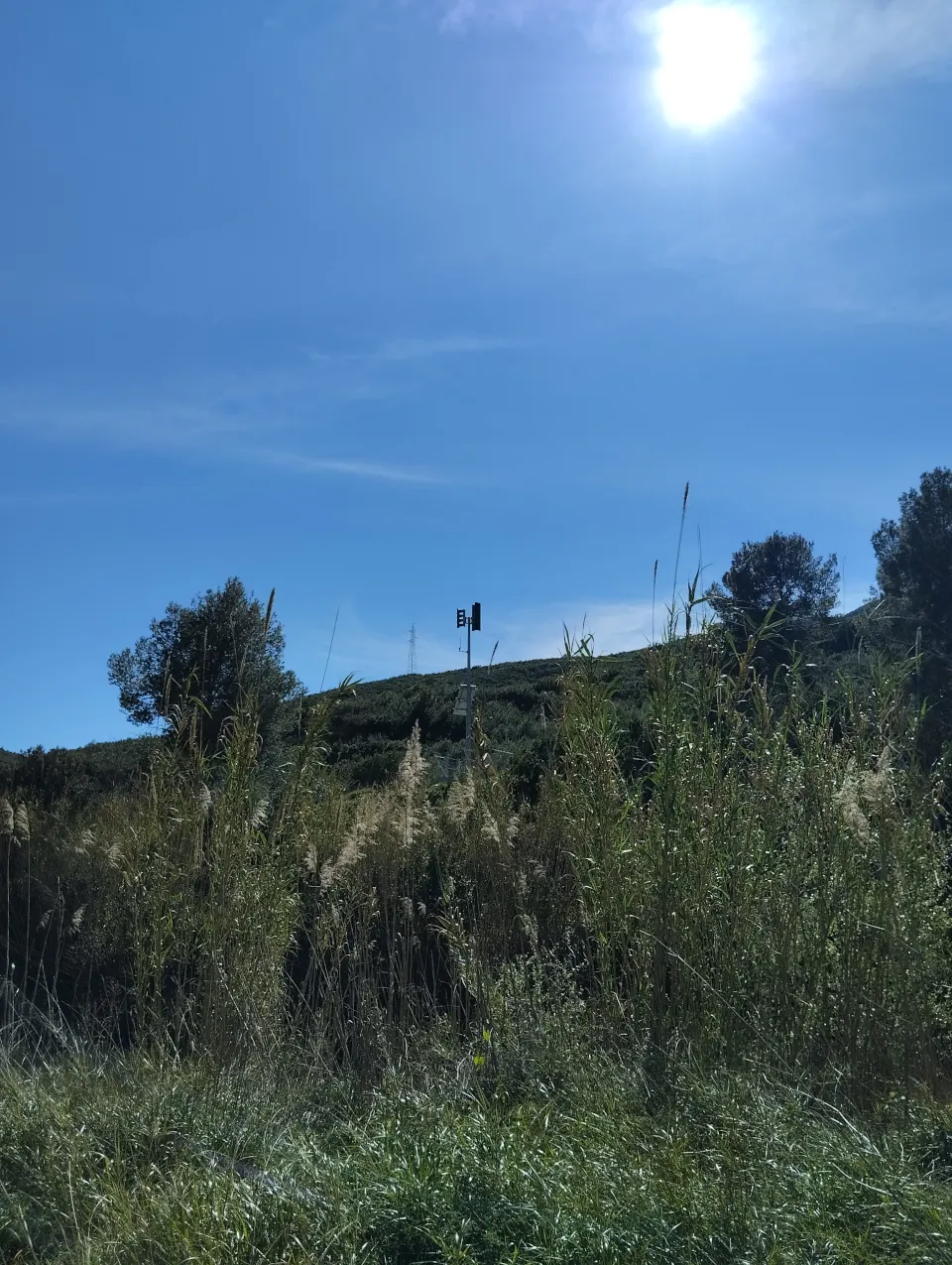
The region of La Serranía, in the interior of the province of Valencia, has become one of the key areas for the development of new public alert systems for floods. After the severe effects of the 2024 DANA, the implementation of the Buseo Dam Emergency Plan marks a turning point in risk management in the upper basin of the Turia River.
A vulnerable territory: Buseo and the Turia
The Buseo reservoir, located along the Reatillo River (a tributary of the Turia) and just a few kilometers from its confluence with it, is in a strategic position within the Valencian hydrological system. Buseo Reservoir
The towns located downstream (such as Chera, Sot de Chera, Chulilla, Gestalgar or Pedralba) can be affected within minutes by a sudden surge of water, especially in extreme situations such as torrential rainfall or a hypothetical dam failure.
During the 2024 DANA, several subsequent reports pointed out a key issue: the lack of effective and timely warnings to the population, which worsened the consequences of the event.
The Emergency Plan: from theory to practice
To correct these shortcomings, the Generalitat Valenciana has promoted the full implementation of the Dam Emergency Plan (PEP) in Buseo.
This plan establishes different risk levels (scenarios), and in the most serious cases requires the activation of direct warnings to the population in flood-prone areas.
The most important innovation is that this warning no longer depends solely on phone calls, media, or mobile messages:
it now includes acoustic sirens distributed across the affected municipalities.
In March 2026, a real drill was carried out to test its operation:
- Activation of sirens in Chera, Sot de Chera and Chulilla
- Simultaneous sending of mobile alerts via ES-Alert
- Coordination between multiple emergency agencies
In addition, the protocol establishes that these sirens must be activated immediately in critical scenarios, without administrative delays.
What type of loudspeakers are being installed?
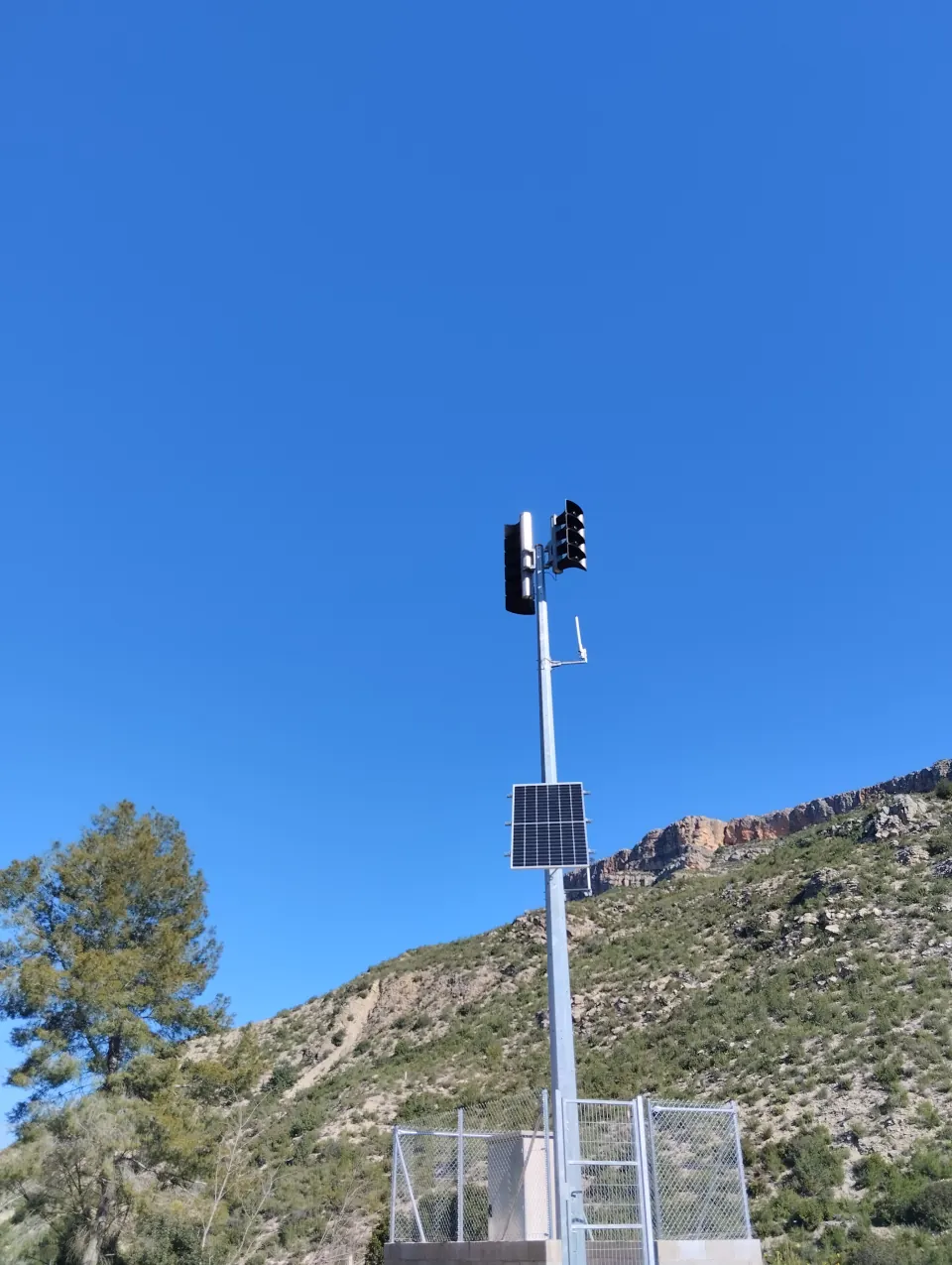
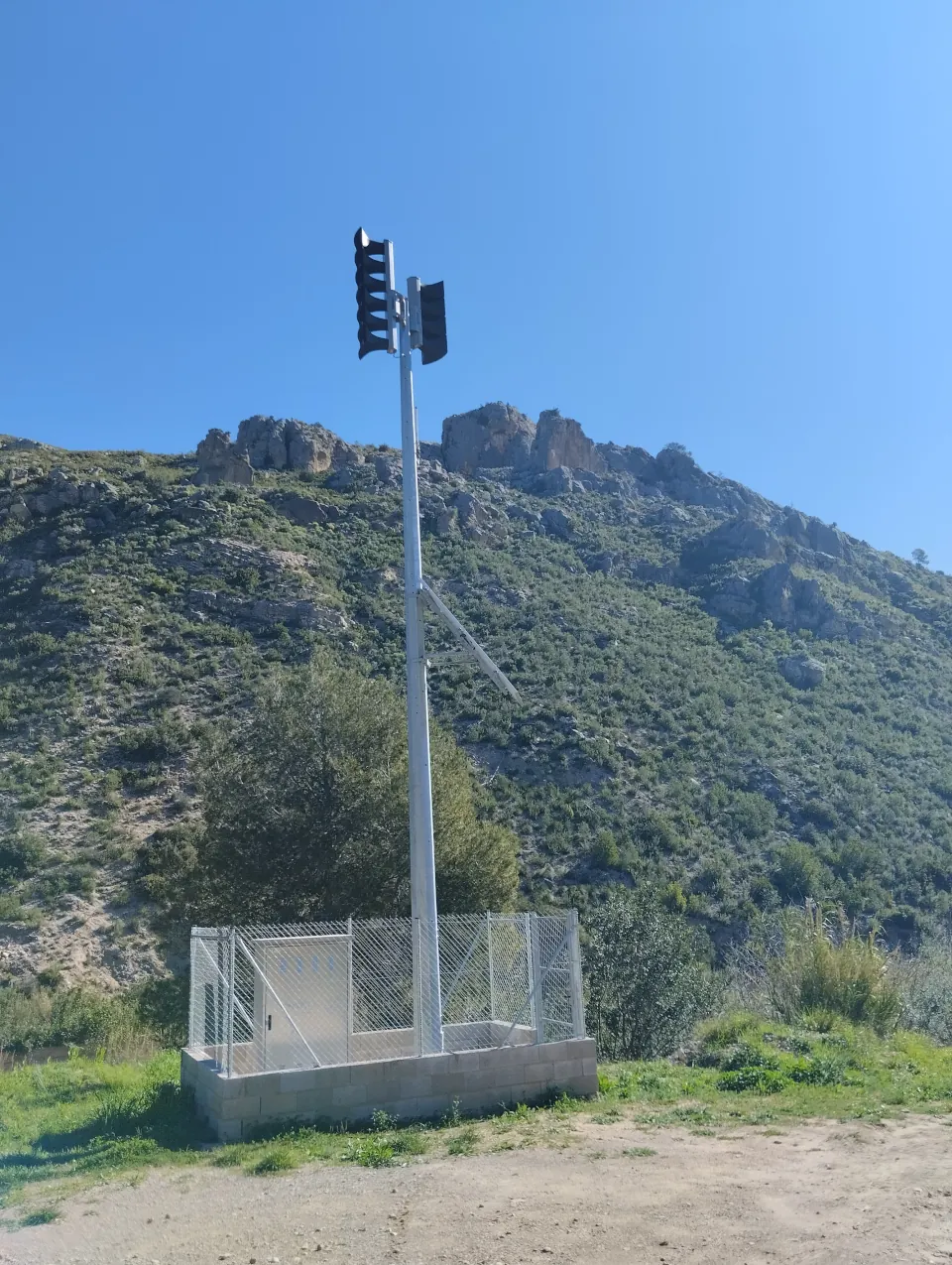
The systems used belong to the family of civil defense electronic sirens, specifically designed to alert large populations in a short time.
Main features:
- High acoustic power (over 1000 W in many cases)
- Wide coverage: several kilometers of range
- Omnidirectional speakers, capable of emitting sound in all directions
- Encoded acoustic signals (different tones depending on the type of alert)
- Capability for live or pre-recorded voice messages
I do not know how many have been installed in the Chulilla area. There is at least one that I photographed just past the spa.
This type of system, used worldwide for emergencies, allows the emission of recognizable sound patterns (rising and falling tones, long pulses, etc.) that indicate immediate danger.
In some cases, these systems are integrated into emergency communication networks and can be activated remotely from control centers.
How alerts to the population are improved
The incorporation of sirens represents a key change compared to previous systems.
Before
- Dependence on calls to 112
- Delayed warnings or communication saturation
- Almost exclusive reliance on mobile phones
Now
- 🔊 Immediate and mass warning through sound
- 📱 Complemented by ES-Alert (mobile messages)
- 🧭 Automatic or centralized activation depending on risk level
This solves several critical problems:
1. Warning even without coverage
The sirens work even if:
- There is no mobile signal
- The phone is turned off
- The person is asleep
2. Reduced reaction time
The sound is immediate and hard to ignore, allowing:
- Faster evacuations
- Less exposure in flood-prone areas
3. Coverage in rural areas
In regions like La Serranía, with dispersed populations, sirens are especially effective compared to digital systems.
A combined system: the future of early warning
The model being implemented in the Buseo basin and the Turia River is not based on a single technology, but on the combination of several:
- Water level and rainfall sensors
- Dam monitoring
- Emergency coordination centers
- 📱 ES-Alert (cell broadcast)
- 🔊 Acoustic sirens
The objective is clear: to ensure that warnings reach people through multiple channels without failure.
The present of flood emergency alerts
The installation of sirens in the Buseo dam and Turia River area represents a decisive step forward in civil protection in inland Valencia.
More than just a technical improvement, it represents a shift in approach:
👉 moving from reactive systems dependent on mobile phones
👉 to a model of immediate, redundant, and accessible alerts for the entire population
In a territory where water can change everything in a matter of minutes, hearing a siren in time can make the difference between danger and survival.